01
City space
A meeting point for residents, sport and public events.
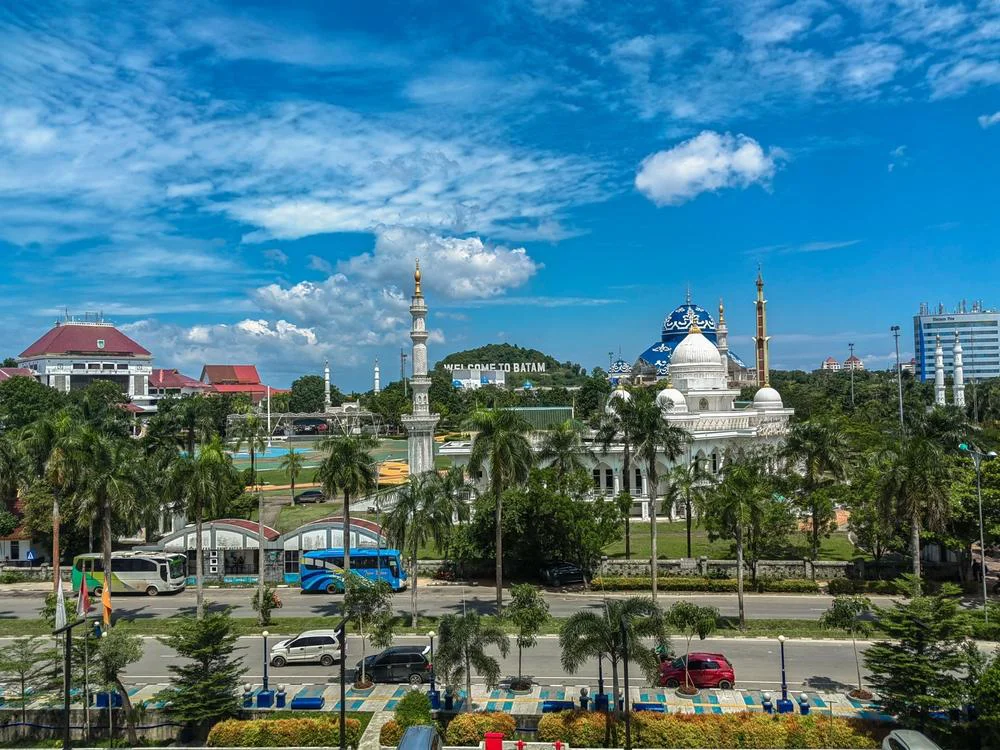
Public space · Batam Kota
Dataran Engku Putri (Batam Centre Park) is the meeting point of the city at the heart of Batam’s government district—where sport, city events, family recreation and Malay heritage meet in one urban landscape.
Lead photo: Ministry of Tourism of the Republic of Indonesia / Indonesia.travel.
01
A meeting point for residents, sport and public events.
02
The name Engku Putri recalls the figure of Engku Hamidah.
03
Located in the Batam Centre district, connected to city transport and close to Batam Centre Ferry Terminal.
04
This guide takes no commission and recommends no specific vendors.
Getting to know the place
Alun Alun Batam Centre (Batam Centre Park) works as the shared front yard of the city: open, easy to read, and constantly changing with the rhythm of Batam’s community.
Welcome to Alun Alun Batam Centre, the public space widely known as Batam Centre Park or Dataran Engku Putri. At the heart of Kota Batam, Riau Islands, Indonesia, this area is the main meeting point for residents and visitors alike in Batam’s government district.
Location hierarchy: Alun Alun Batam Centre → Kota Batam → Riau Islands → Indonesia
Indonesia’s national tourism portal describes Alun Alun Batam Centre (Batam Centre Park)—also known as Dataran Engku Putri—as the main public space of Kota Batam. It sits within the government district and serves as a place to gather, relax, exercise, enjoy family activities, and host cultural, entertainment and sporting events.
Batam City Government reports throughout 2026 show Alun Alun Batam Centre (Batam Centre Park) / Dataran Engku Putri still being used for public service launches, sporting activities and large community gatherings.
The sports field in this area was revitalised in 2026. Physical conditions may therefore differ from older photos; rely on what you find on site when you visit.
Traces of a name
A publication of Batam Kota district explains that Engku Putri was named Engku Hamidah, a daughter of Raja Haji in the tradition of the Malay Riau–Lingga kingdom. She is remembered as an authoritative figure who understood economic and political affairs and held a role in royal custom.
That name gives the square a deeper layer of meaning than a mere open space: it links today’s Batam government centre with the Malay–Bugis historical memory of the Riau Islands.
City history background
This section summarises the historical layers that make the name and the position of the square understandable: why it sits in the government centre, and why its name refers to a Malay figure.
The Malay sultanate era
The Riau Islands were part of a network of Malay sultanates controlling shipping and trade routes around the Strait of Malacca. Names of nobility from this period—including figures remembered as Engku Putri and Raja Haji—continue to be used for public spaces today.
Port and industrial era
In the later part of the twentieth century Batam was developed as an industrial and port area. Rapid growth brought migrants from many regions, turning the city into a plural urban society.
Building the government centre
Batam Centre was designed as the administrative core: regional offices, the grand mosque, the museum and open space were placed close to one another. Such a layout puts government business and the public space of residents on the same axis.
Today
Dataran Engku Putri (Batam Centre Park) serves as an everyday space for residents: morning exercise, family activities, government programme launches, concerts and city celebrations.
Naming it Dataran Engku Putri is not just a label: it connects a brand-new government district with the Malay historical memory of the Riau Islands. In many Indonesian towns, the alun-alun is indeed placed near the seat of power as a sign that the space belongs to everyone.
In a tropical city, open space does double duty: it hosts mass gatherings, provides shade and airflow, and offers a safe meeting point during celebrations. It is therefore natural that its facilities keep being revitalised to follow residents’ needs.
The city museum in this district holds the historical context of the Riau Islands—from Malay tradition to the colonial period. Visiting it before or after Alun Alun Batam Centre gives your trip a storyline, not just photographs.
The city’s grand mosque stands as a marker of the district and a reminder that active religious functions surround the square. Prayer times and religious activities influence how crowded and how noisy the surroundings should be.
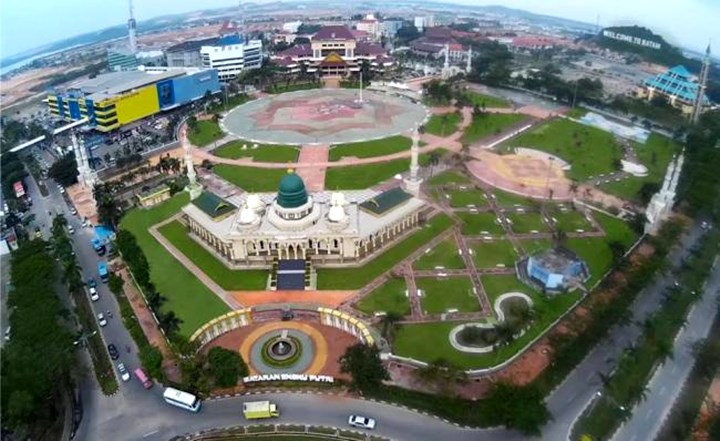
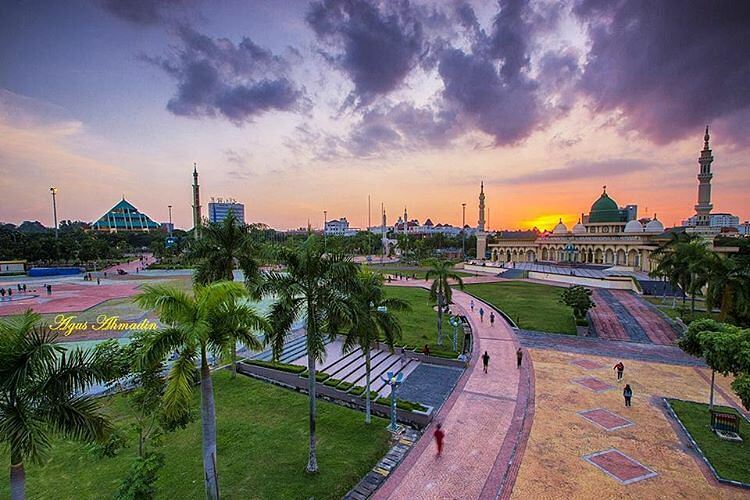
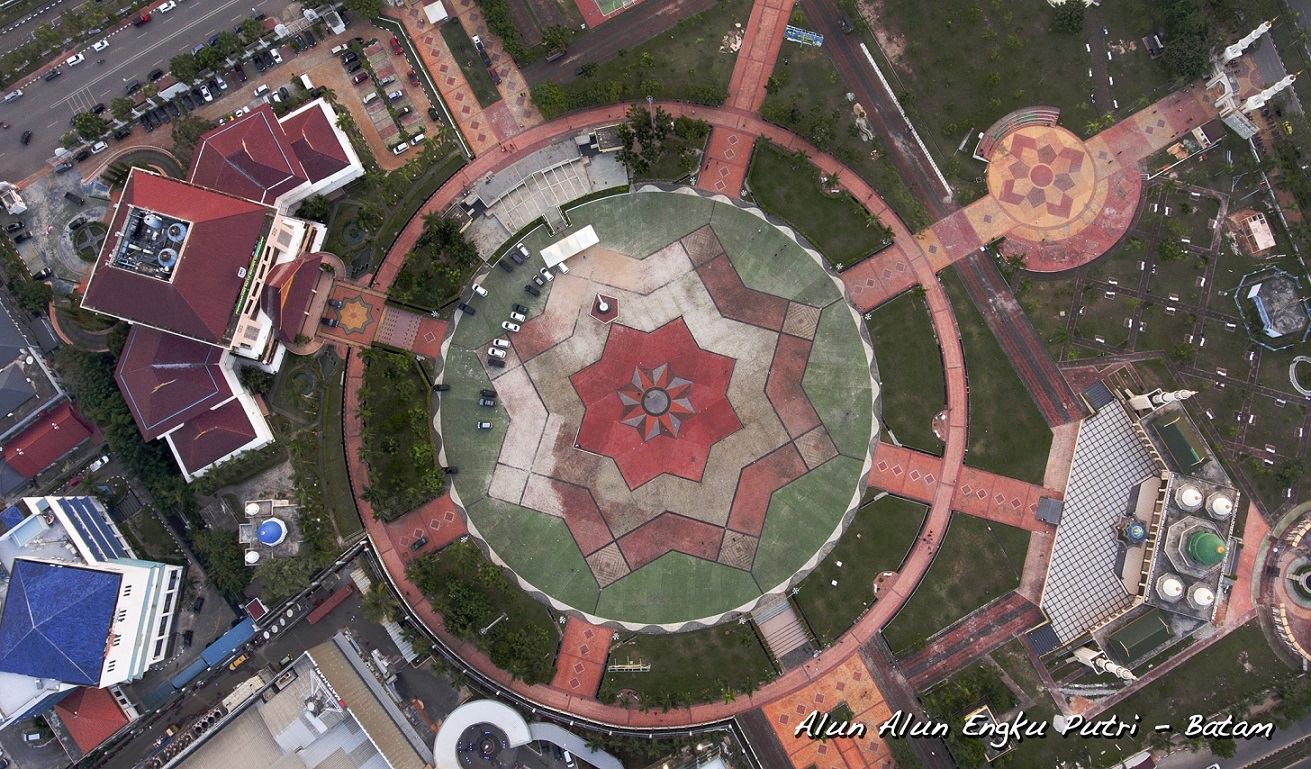
Field gallery
Photos are stored locally so pages load fast and do not depend on third-party image hosts. Copyright remains with the respective owners.
Visit planning
This is an active public space, not a fenced attraction. The best experience comes from reading the weather, the city’s event calendar and the facilities available on your visiting day.
Early morning before the heat or around sunset. Evenings are livelier, especially during public events.
Allow 1–2 hours for an easy walk, photos and getting to know the area.
No regular entrance ticket found. Events, parking or third-party services may charge a fee.
Follow signage and officers. During large events, parking zones and vehicle access may be arranged differently.
Weather & forecast
A summary of current conditions and the forecast for the days ahead in the Batam Centre area, translated into decisions you can act on immediately.
28°C
Heavy rain showers
Updated 10:45 WIB
Heavy rain showers · 25–31°C · High chance of rain (86%) · Light breeze
The air is very humid; sweat evaporates slowly, so you will need more frequent shade breaks.
Daily forecast
⚠ Worth noting
These notes are derived from the forecast, not an official early warning. For official warnings, refer to the BMKG information channels.
✅ What to wear
🗓 Planning your visit
🎒 What to bring
A chance of rain is not a certainty of rain; forecast figures are refreshed throughout the day and may change. For official early weather warnings, use the BMKG information channels.
Facilities & practical needs
Because facilities in public spaces can change, the list below takes a conservative approach: we tell you the type of service to look for without advertising any particular operator.
The basic facilities visitors look for most often.
Check the nearest public sanitation facility on arrival; opening hours can differ.
Bring your own refillable bottle. Refill points can change, so do not make one your only water source.
Carry wet wipes or hand sanitiser, especially after using public facilities or playing in the open area.
An active public space: arrangements can change during events.
The surface of the square is relatively open, but ramps, pavements and crossings should be checked on site.
Follow signage and officers. During large events, parking zones and vehicle access can be arranged differently.
Choose a drop-off point that does not block traffic lanes or emergency access before the vehicle stops.
Use official crossings. Traffic around the government district increases during working hours.
We describe types of services, not individual businesses.
Look for MSME stalls during events, local eateries, family restaurants, or public dining areas in the Batam Centre district.
Choose a licensed hotel, city guesthouse or rental apartment in the Batam Centre area according to your mobility needs.
Convenience stores, supermarkets and daily-needs centres are available in the surrounding urban area.
Pharmacies and basic supply stores are part of the city’s commercial network; keep personal medication in your own bag.
Answering common searches: running spots, jogging and nearby recreation.
The edges of the field form a loop around the open space used for easy runs and morning exercise. Check the surface condition and lighting before you start.
The sports field in this area was revitalised in 2026. Usage hours may be arranged for community activities, so check the situation on site.
The national tourism portal mentions a play area. Supervise children and avoid the hottest hours.
Look for benches or shaded edges for a break. If none are free, your own sitting mat can serve as a backup.
Plan ahead before relying on a single service point.
Fuel stations are on the city road network; check your route before driving as traffic around the city centre can change.
Public charging availability is growing; check the operator app or official network map before relying on one point.
Identify the nearest health facility and local emergency numbers before leaving, especially when travelling with seniors or children.
During large events, note where officers or information posts are visible so you know where to ask for help.
Detailed transport
Use the names “Alun Alun Batam Centre (Batam Centre Park)” or “Dataran Engku Putri” in map applications. The spot is on Jl. Engku Putri, Teluk Tering, Batam Kota district—close to the Batam Centre Ferry Terminal area.
Transport options
An official taxi or app-based ride is the direct option. In May 2026 the Batam City Government stated that the Nongsa–Batam Centre corridor is being prepared for integration with the airport. Because this is still a service development, check the latest route and stops before departure. The airport is on the eastern side of Batam Island, so land travel time depends heavily on rush-hour traffic.
The city transport profile lists several corridors that end at or pass through Batam Centre, including from Sekupang, Tanjung Uncang, Jodoh, Tanjung Piayu and Nongsa. Suitable when you are not in a hurry; check the latest schedules, stops and payment methods on official channels before boarding. Carry small change and allow extra waiting time when travelling during working hours.
Set a drop-off point on the safe side of the road, avoid stopping in traffic lanes, and confirm the vehicle identity before getting in. For taxis, use official queues or operators and make sure you understand the fare scheme before the trip. If mobile signal is weak, name a clear landmark: the square or the nearest government building.
Batam Centre Ferry Terminal and Alun Alun Batam Centre (Batam Centre Park) are both in the core Batam Centre area. You can take a short taxi or app-based ride, or walk when weather, luggage, pavements and physical ability allow. Use the map to choose a safe crossing towards Dataran Engku Putri.
Arrive earlier if you want to park close to the field entrance. During large events, officers may close part of the road or set special parking zones; follow the signage and instructions on site. Do not park on the road shoulder, on pedestrian lanes, or on emergency access.
This district is a government centre with moderate traffic. Use pavements and official crossings; if you use a wheelchair or a pram, check the condition of ramps along your route first. Distances between points in Batam Centre are relatively short, so short trips can be split with shaded breaks.
Weekday mornings and afternoons bring heavier traffic on the main roads towards the government centre. For a relaxed visit, come outside those hours or around sunset. If your schedule depends on a ferry, add a time margin for road crossings and vehicle queues.
Practical travel tips
Location map
The map comes from the Google Maps public service and loads only in this section. The embedded map language and region are set to Indonesia.
Alun Alun Batam Centre (Batam Centre Park) / Dataran Engku PutriAlun Alun Batam Centre → Kota Batam → Riau Islands → Indonesia
For official updates and regional tourism information, refer to this portal or the national Indonesian government tourism portal. indonesia.travel.
Seasonal strategy
The table below summarises weather patterns commonly found on the Riau Islands coast throughout the year. This is a long-term average picture, not a forecast for a specific day—individual years can deviate from the general pattern.
January – March
The start of the year is still humid; short rain can appear in the afternoon, alternating with clear skies.
Come in the morning for field activities; keep an indoor plan as a backup if rain falls.
Folding umbrella, quick-drying footwear
April – June
A transition period: hot at midday, with rainfall beginning to decrease compared with the start of the year.
Focus on visits around sunset; midday suits a short stop at the museum or another indoor space.
Sunscreen, drinking water, hat
July – September
Usually among the drier periods, with noticeable wind in open areas.
The best time for long walks, landscape photography and family activities; stay alert for sudden rain.
Sun protection, light jacket for air-conditioned rooms
October – December
Rainfall tends to increase; heavy rain can arrive together with strong wind.
Check the forecast on the same day, avoid open areas during thunderstorms, and pick a route with plenty of shelter.
Raincoat, bag cover, non-slip footwear
The seasonal patterns above are a general summary for planning. For official forecasts and early warnings, refer to the BMKG.
Themed routes
The routes below are built around the needs of your group, not a fixed order. Choose the one closest to your composition and travel rhythm.
Travelling with toddlers up to school-age children
Pace: 60–90 minutes with breaks
Flow: Field entrance → Open field area → Play point that is currently open → Shaded spot for snacks → Museum Batam Raja Ali Haji as a rainy-day backup
Supervise children near roads and vehicles; bring drinking water and sun protection.
Visitors chasing light and composition
Pace: 90–150 minutes, morning or before sunset
Flow: Main axis of the field → Edge of the government district → Skyline of buildings and the mosque → Crowds during events → Higher vantage points around Batam Centre
Ask permission before photographing people; check local rules before flying a drone.
Seniors, wheelchair users, or injury recovery
Pace: 45–60 minutes with plenty of seated breaks
Flow: Vehicle drop-off point → Flattest main path → Shaded seating area → Indoor space → Back to the drop-off point
Check ramp and pavement conditions on site; avoid the hottest hours and carry personal medication.
Half-day route
Suitable if you arrive by ferry and only have a short gap before continuing your journey.
Full-day route
Combines the public space with the museum and a religious landmark in one day, with a break when the sun is harshest.
Agenda & events
Event schedules in public spaces change quickly. We therefore do not copy a daily event list; we summarise the kinds of events that are commonly held and point to the official channels where exact dates and times can be confirmed.
Dataran Engku Putri works as the city’s stage: the local government uses it for public service programmes, sporting activities and large-scale celebrations.
During events, parking zones and vehicle access are arranged differently, part of the area may be covered by stages or tents, and noise levels rise—especially towards the evening.
Come earlier than the schedule, follow the officers’ directions, agree on a meeting point with your group, and keep an exit route that does not block emergency access.
Examples of event types
Official channels for exact schedules
We only summarise general event patterns based on official reporting. For dates, times and entry conditions—including whether a specific event is ticketed or requires registration—always refer to the organiser’s announcement.
Food nearby
As a non-profit guide we do not direct visitors to any particular vendor. In Batam Centre, look for the category that suits your needs and check cleanliness, prices and opening hours yourself.
Dishes typical of the Riau Islands you can look for include mie tarempa, gonggong dishes, seafood and a range of Malay cooking. Availability depends on the place and the day.
Around the square
When visiting Alun Alun Batam Centre, visitors can easily explore the surrounding historical landmarks and points of interest, including Museum Batam Raja Ali Haji, Masjid Agung Batam and Batam Centre Ferry Terminal.
A public museum that adds historical context about the city and the Riau Islands.
A city sign that works as a visual orientation point in the Batam Centre area.
A religious and architectural landmark; respect the rules and prayer times.
Distances, opening hours and access can change. Check official channels or the map before combining several places in one visit.
Ethics of a shared space
Do not block pedestrian lanes, the sports field, emergency access, or areas being used for community activities.
Use the bins provided. If they are full, keep your rubbish until you find a proper disposal point.
Follow the officers’ arrangements and keep the volume down, especially when the surroundings are used for official or religious activities.
Education & visitor responsibility
This section explains the reasoning behind rules that are often considered trivial—from puddles to music volume—so decisions on site are made with understanding, not just compliance.
Open public space works as the “living room” of the city: a place where different groups meet without paying, a venue for morning exercise, a shaded area that lowers surface heat, and a safe gathering point for large events. Understanding this function makes a visit more meaningful than a quick photo.
Tropical rain falls fast and hard. Short-lived puddles in low spots are normal and usually recede once the drains are working. Small litter—wrappers, straws, cigarette ends—is the main cause of blocked drains, so never throw anything into drains or ponds around the area.
The trees around the field provide the shade that determines whether a midday visit is comfortable. The area is also habitat for urban birds and pollinating insects. Enjoy them from a distance: do not pick plants, disturb nests, or feed wild animals.
The square is surrounded by government offices, places of worship and housing. Keep music and loudspeaker volume down, especially near prayer times and during working hours. Large-scale events usually require permits and officer arrangements.
Use the bins provided; if they are full, keep your waste until you find another disposal point. Separating dry and wet waste helps the city cleaning crews who work after events finish.
Keep valuables in a closed bag, especially when the area is busy with an event. At night, choose bright and busy routes. The integrated emergency number in Indonesia is 112; also save the contact of your travel companion before leaving.
Common questions
Answers are written conservatively. When public sources cannot confirm a facility, we say it needs checking rather than making an assumption.
Alun Alun Batam Centre (Batam Centre Park / Dataran Engku Putri) sits at 43H3+CRQ, Jl. Engku Putri, Teluk Tering, Kec. Batam Kota, Kota Batam, Kepulauan Riau 29444, Indonesia. The spot lies in the core of Batam Centre, close to Batam Centre Ferry Terminal.
The same public space is also called Batam Centre Park and Dataran Engku Putri. In map applications, search for "Alun Alun Batam Centre" or "Dataran Engku Putri"—both point to the same location.
From Alun Alun Batam Centre, visitors can continue to Museum Batam Raja Ali Haji for the city’s historical context, Masjid Agung Batam as a religious and architectural landmark, and Batam Centre Ferry Terminal for onward island travel. Distances and opening hours of each place should be checked on the day of your visit.
The snapshot of 4.5 from 5,811 reviews on the public map service (September 2026) is only an indicator of visitor perception. It is not an official assessment and can change over time.
Event schedules in public spaces change quickly and are not available in a single open source we can update automatically. To find out what happens on a given day, check the official announcements of the Batam City Government and the Batam City Culture and Tourism Office, and arrive early for large-scale events.
The edges of the field form a loop around the open space that residents use for easy runs and morning exercise, which is why this area often appears among running spots in Batam. Surface condition, lighting and crowd levels vary; early morning before the heat or shortly before sunset is most comfortable, and it is best to check conditions on site before running.
The national tourism portal describes this area as a family public space with play areas and places to relax. Availability and condition of facilities can change with revitalisation works and event schedules; supervise children and avoid the hottest hours.
Batam has a tropical coastal climate: warm and humid all year, with rain that usually falls briefly but heavily. Daily patterns matter more than seasonal ones, so check the forecast on your visiting day and bring an umbrella or a light raincoat.
Months with lower rainfall are usually more comfortable for long walks and photography, while wetter periods call for an indoor backup plan. Whatever the season, early morning and the hours before sunset remain the friendliest times in the open space.
Follow the signage, the officers on duty, and the parking zones set for the event day. Do not park on the road shoulder, on pedestrian lanes, or on emergency access; if needed, drop passengers at a safe point and look for parking further away.
We found no regular entrance ticket for this public space in the government sources and national tourism portals we checked. Special events, parking, or third-party services around the area may have their own charges.
Public map listings show all-day access. However, certain facilities, temporary closures, event arrangements, or security restrictions can follow a different schedule. Check the latest conditions before a night visit or a major event.
Early morning before the heat and the hours before sunset are usually the most comfortable for walking, exercising, or simply enjoying the open space. When city events are held, the atmosphere is livelier and access patterns may change.
To get to know Alun Alun Batam Centre (Batam Centre Park), take photos and walk at an easy pace, allow about one to two hours. Add more time if you plan to combine the visit with museums, landmarks, or public activities around Batam Centre.
The simplest options are an official taxi or an app-based ride. The Batam City Government is also integrating the Nongsa–Batam Centre Trans Batam corridor with Hang Nadim Airport. If you arrive via Batam Centre Ferry Terminal, the distance to Alun Alun Batam Centre (Batam Centre Park) is relatively short; check the latest routes and stops before relying on a single mode of transport.
The Batam Centre government district has parking arrangements that can change with events. During large events, follow signage, officers, and designated parking zones. Do not park on the road shoulder or on emergency access.
The availability and opening hours of public toilets or sanitation facilities can change. Identify the nearest public facility on arrival and do not rely on park toilets as your only plan, especially for night visits or large events.
The national tourism portal describes this area as a family public space with play areas and room to relax. Keep an eye on children, watch for traffic on the surrounding roads, and prepare protection from sun or rain.
Methodology & sources
Every entity fact—name, address, coordinates and access—is cross-checked between government channels, the national tourism portal and public map data before it is written.
We prioritise government sources and national tourism institutions, then compare them with map data for the address, coordinates and access information. Commercial information is never used as a recommendation.
Official references for updates
For official updates and regional tourism information, refer to Dinas Kebudayaan dan Pariwisata Kota Batam and the Batam City Government portal. This page discusses Alun Alun Batam Centre (Batam Centre Park) as a public space of Kota Batam and does not represent any government body.